





Packaging Automation: Engineering Smarter, Faster and More Reliable Production Lines
Packaging is one of the most important stages of a modern production process.
It is also an area where automation can have a direct impact on productivity, consistency, product handling and operational efficiency.
However, automating a packaging process is not simply a matter of installing a packaging machine.
The complete system needs to work together.
Products need to arrive at the correct position. Conveyors need to operate at the appropriate speed. Sensors and vision systems need to detect products correctly. Robots may need to pick, place, sort or palletise products. PLCs need to coordinate the equipment, while SCADA and software can provide visibility into the operation.
This is where GPLG's engineering approach becomes important.
PACKAGING AUTOMATION IS A COMPLETE SYSTEM
A modern packaging line is not just a collection of standalone equipment—it relies on multiple technologies communicating in real time. GPLG approaches packaging projects as complete, unified automation systems rather than isolated machines.
STARTING WITH AN ASSESSMENT
Every production environment has unique operational dynamics and requirements. Before recommending any hardware or software solution, GPLG conducts a comprehensive assessment of your existing process.
We analyze physical constraints, current volume capabilities, and constraints on the plant floor:
- Volumes & Products Current production volumes and specific product characteristics.
- Physical Layout Existing machinery, available floor space, and material flow dynamics.
- Manual Workflows Identification of manual operations and recurring bottlenecks.
We align current throughput goals with your future scalability targets and packaging specs:
- Packaging Specs Specific packaging requirements and quality standards.
- Scalability Future production requirements and expansion plans.
- Architecture Data-driven foundation for selecting the right automation model.
ENGINEERING THE PACKAGING LINE
Once the operational assessment is complete, GPLG develops a fully integrated system architecture tailored specifically to your application requirements.
- Conveyor Systems Movement and accumulation of products smoothly between process stages.
- Packaging Equipment Integration of core machinery required for the specific packaging workflow.
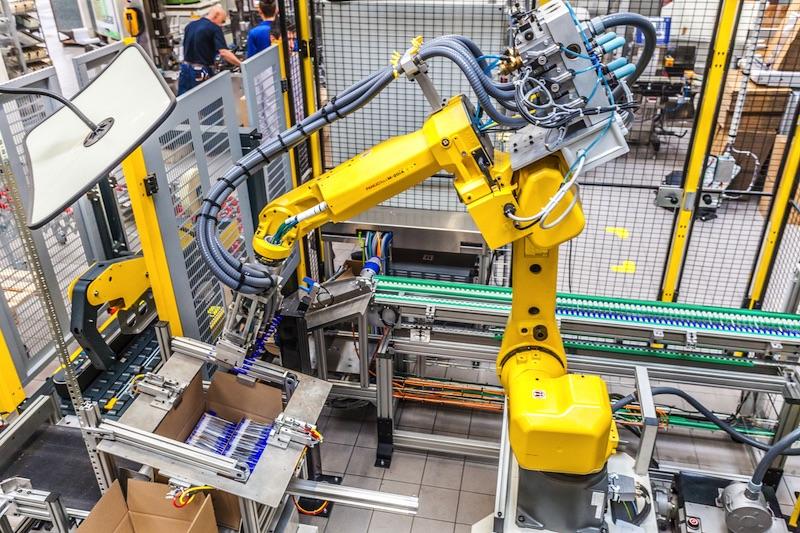
- Robotic Systems Automated pick-and-place, sorting, packing, and high-speed palletising.
- Machine Vision Advanced optical inspection, part identification, orientation, and quality verification.
- PLC Control Robust logic programming coordinating the complete production sequence.
- SCADA Architecture Real-time monitoring, intuitive visualisation, alarms, and production metrics.
- Industrial Software Custom applications and seamless database integration built for your facility.
ROBOTICS IN PACKAGING
Robotics can significantly expand the possibilities of automated packaging, bringing unmatched flexibility, speed, and precision to repetitive line tasks.
- Pick and Place High-speed transfer of products between streams.
- Product Sorting Intelligent classification based on attributes or destination.
- Product Orientation Dynamic alignment before packaging stages.
- Material Handling Seamless transport and loading of raw items.
- Case Packing Automated loading of products into secondary boxes.
- Carton Handling Efficient erection, filling, and closing support.
- Tray Loading Precise placement into thermoformed or custom trays.
- Palletising / Depalletising Heavy-payload stacking and unstacking.
MACHINE VISION FOR PACKAGING
Vision systems provide the critical optical data required for real-time automated decisions, transforming raw images into actionable inspection and guidance metrics across the packaging line.
- Product Presence Instant confirmation of item availability on the line.
- Packaging Integrity Detailed inspection of seals, labels, and physical containers.
- Defect Detection Immediate identification of flaws or foreign contaminants.
- Final Verification Comprehensive check of completed packaging before dispatch.
- Product Identification Barcode, QR code, and OCR reading for traceability.
- Orientation Check Verifying alignment and rotation prior to handling.
- Robotic Guidance Providing precise coordinate data to robotic pick-and-place arms.
PLC, SCADA, DATA & LIFECYCLE COMMISSIONING
The control architecture is fundamental to a reliable packaging line. GPLG develops robust PLC logic to coordinate every stage, while SCADA provides operators with a clear interface for real-time monitoring and control.
Modern lines generate valuable telemetry. We integrate data systems to record key metrics supporting reporting and future optimization:
- Production Quantities & Batches Track throughput and batch runs.
- Machine States & Downtime Monitor equipment availability and stoppages.
- Alarms & Quality Results Instant alerts and verification metrics.
- Packaging Parameters Detailed operational records for traceability.
Automation must have a clear operational purpose, evaluated directly against real production requirements:
- Capacity & Consistency Increase output and minimize handling errors.
- Ergonomics & Flow Reduce repetitive manual work and optimize material flow.
- Quality & Traceability Boost inspection capability and future growth readiness.
Single-source execution means you never need to coordinate separate technology suppliers for different parts of the automation system.
Planning a Packaging Automation Project?
Let's discuss your production process and determine the right technical approach.