




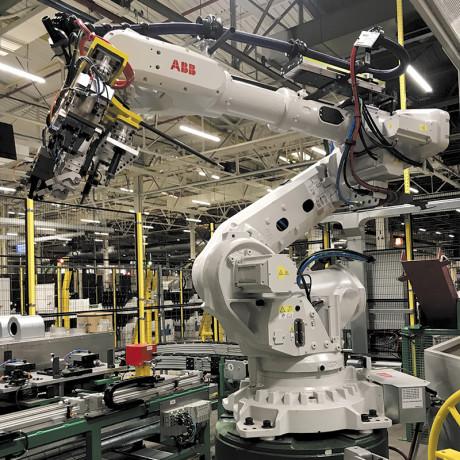
Robotics integrated around the production process
Industrial robot cells engineered as complete production systems—combining robots, PLC control, safety, tooling, vision, material handling and operator interaction.
Discuss your robotics project →Successful robot integration goes beyond programming the robot
The robot is only one part of the cell. Reliable production depends on how it interacts with tooling, sensors, PLC logic, conveyors, guarding, safety functions and surrounding equipment.
GPLG develops the complete integration around cycle requirements, product flow, operating states, fault recovery and maintainability.
Engineering the complete robotic cell
Robot programming
Motion sequences, positions, tools, frames, routines and recovery logic structured around the production task.
PLC integration
Robot/PLC handshakes, operating states, permissives, interlocks, alarms and coordinated line sequences.
Tooling & end effectors
Grippers, vacuum systems, process tools and sensors integrated with the robot and production requirements.
Machine vision
Vision-guided positioning, product recognition, inspection and process verification integrated into the cell.
Material handling
Conveyors, transfer systems, pallets and product flow coordinated with robot cycles and machine availability.
Safety integration
Robot-cell operation coordinated with guarding, access conditions and machine safety interfaces.
Movement coordinated with the complete machine sequence
A robotic cell must respond correctly to production states, product availability, machine readiness and abnormal conditions.
- Robot and PLC sequence coordination
- Cycle permissives and interlocks
- Tool and product confirmation
- Controlled stop and fault recovery
Every layer has a defined role
Parts · Pallets · Packaging
Sensors · Vision · Identification
Robot · Tooling · Motion
PLC · I/O · Drives · Safety
HMI · Modes · Diagnostics
Machines · SCADA · Data
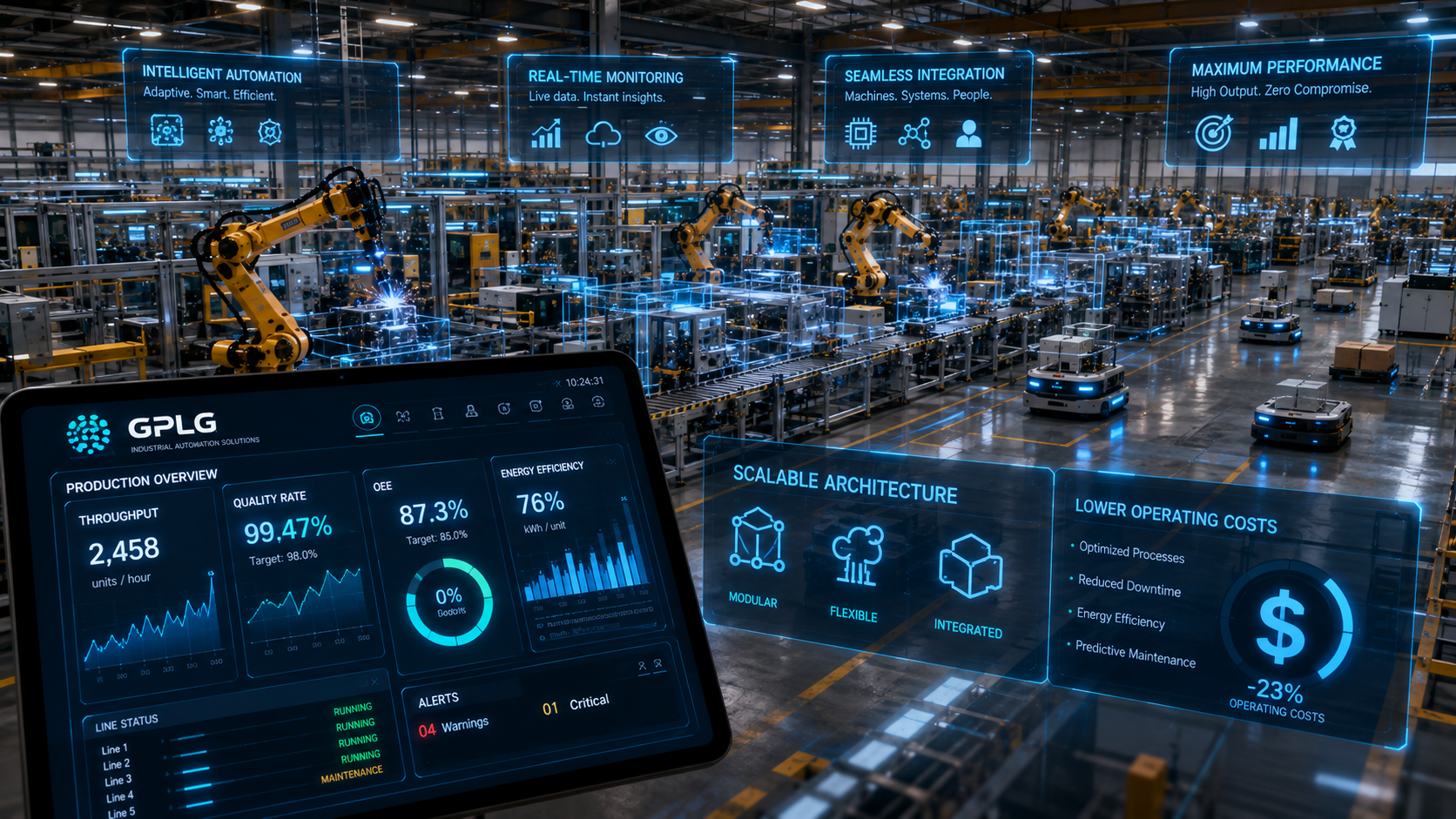
The robot must communicate with the rest of production
Robotics creates value when integrated with machine control, supervision, traceability and production information—not when it operates as an isolated island.
Robotic systems designed for production change
Product variants, tooling changes and evolving production requirements should be considered during cell engineering.
- Product and recipe variants
- Tool-change and format-change logic
- Modular robot routines
- Expandable machine interfaces
Automate where robotics creates operational value
The automation level should reflect cycle time, repeatability, ergonomics, process stability and the production objective. The goal is a practical production improvement, not automation for its own sake.
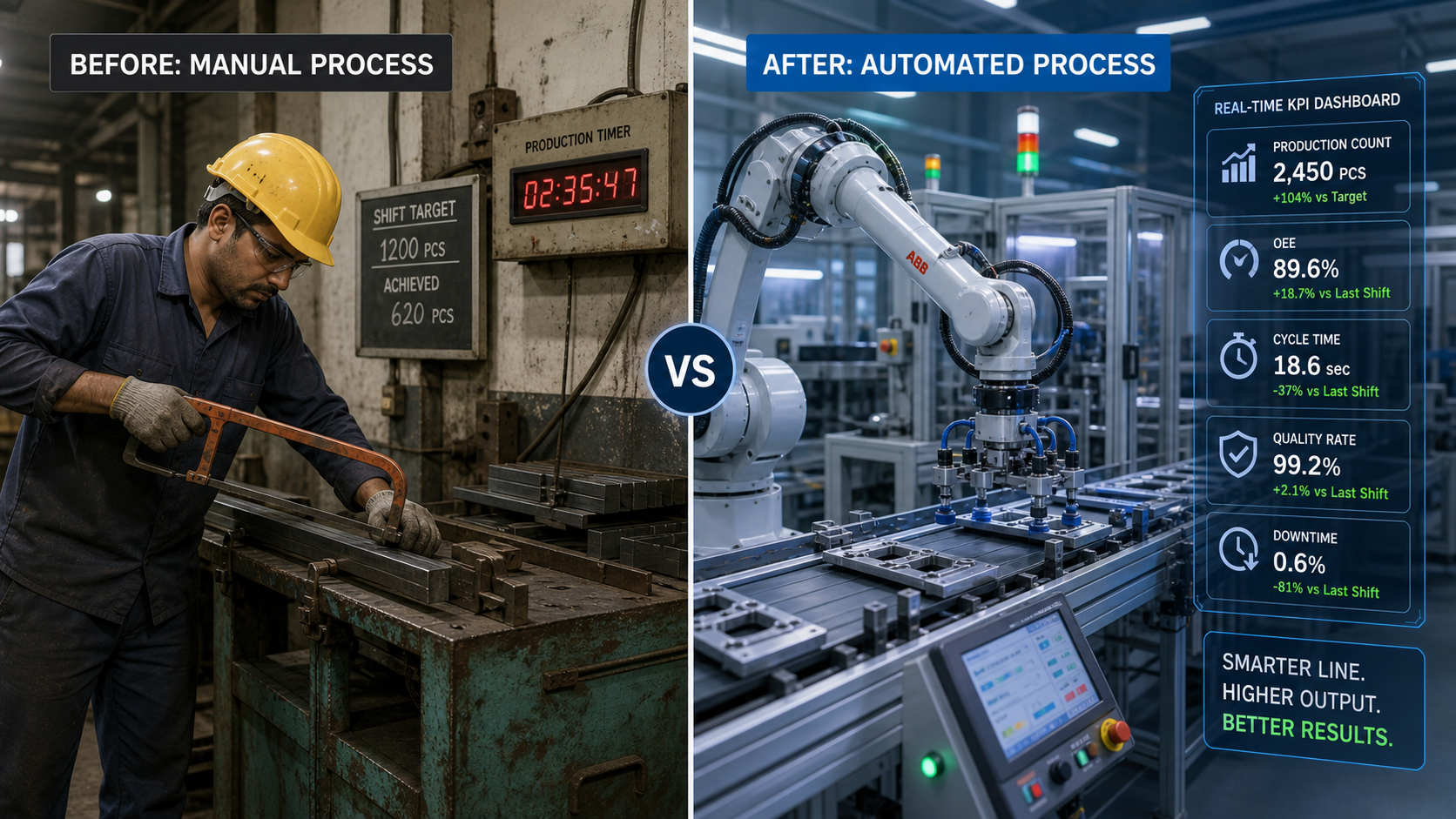
Robots engineered into real machines and production environments
Cell layout, access, tooling, surrounding equipment and operator requirements influence the final engineering. GPLG considers the complete working environment.
From application study to stable production
Assess
Product, task, cycle, environment and interfaces.
Design
Cell concept, robot, tooling and control architecture.
Develop
Robot, PLC, HMI, vision and integration software.
Integrate
Equipment, tooling, conveyors and line interfaces.
Commission
Testing, cycle validation, recovery and production start-up.
Support
Diagnostics, optimisation, changes and future evolution.
Build the robotic cell around the production result.
GPLG combines robotics, control, tooling, vision and industrial integration into one maintainable production system.
Discuss your robotics project →