




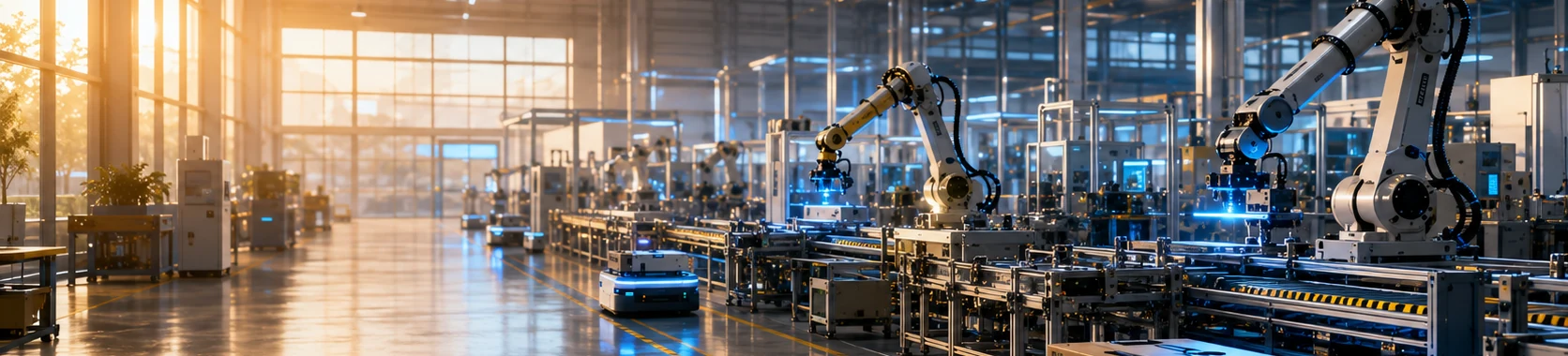
Industrial automation engineered around production
Integrated control, robotics, motion, supervision and industrial software designed to make production more reliable, flexible and easier to operate.
Automation starts with how the machine or production line must operate
GPLG develops industrial automation around the production process—not around isolated components. We connect field devices, machine control, operator interfaces, robotics, supervision and production data into a coherent operating system.
The result is an architecture designed for real operation: clear machine states, controlled sequences, diagnostics, maintainability and future integration.
Engineering across the complete automation layer
From individual machines to integrated production cells and complete lines.
PLC & machine control
Sequences, interlocks, operating modes, I/O handling, alarms and diagnostics structured around machine behaviour.
Sensors & field devices
Integration of sensors, actuators, instrumentation, drives and distributed I/O with clear signal management.
Motion & drives
Coordinated motion, servo systems, variable-speed drives and positioning functions integrated with machine control.
Robotics integration
Robot cells connected to PLC logic, safety systems, conveyors, tooling, vision and upstream/downstream equipment.
HMI & SCADA
Operator interfaces and supervisory systems for status, commands, alarms, trends, diagnostics and production visibility.
Industrial communications
Reliable exchange between machines and systems using appropriate industrial networks, OPC UA, MQTT and application interfaces.
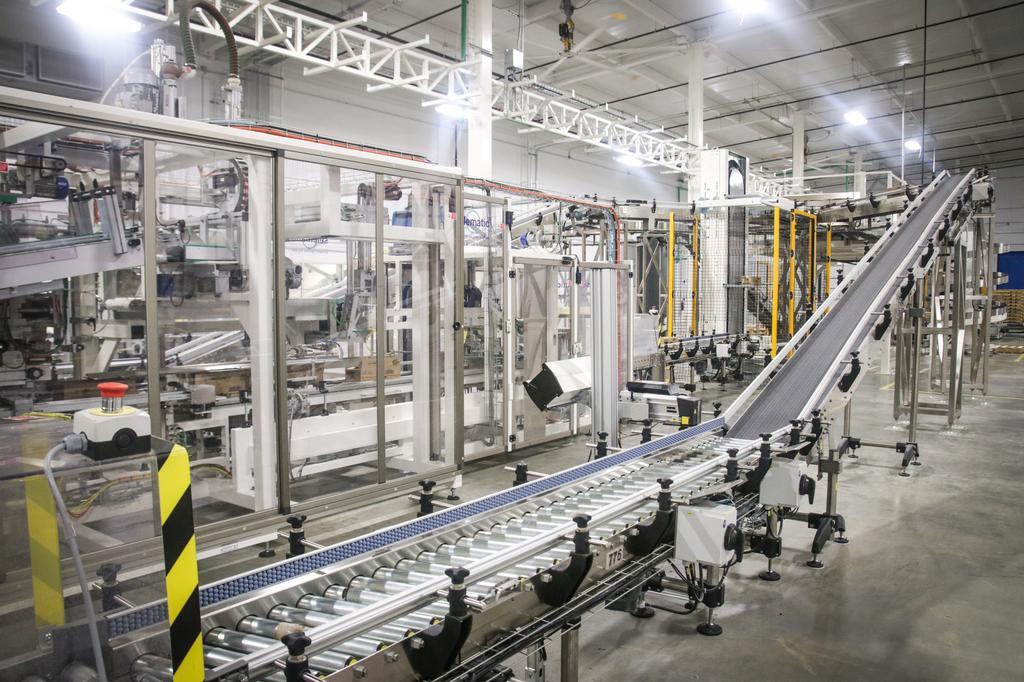
One control architecture across the production process
Machines operate better when control boundaries, interfaces and dependencies are defined from the beginning. GPLG integrates equipment so commands, status, faults and production information move clearly across the line.
From the field to operational information
Sensors · Actuators · Instrumentation
PLC · Motion · Drives · Safety
Sequences · Modes · Diagnostics
HMI · SCADA · Alarms · Trends
Robotics · Vision · Line Systems
Historian · IIoT · Applications
Engineering must work on the factory floor
Control software, mechanical movement, sensors and production equipment must behave as one system under real operating conditions—not only during simulation or commissioning.
Integrating movement into the production sequence
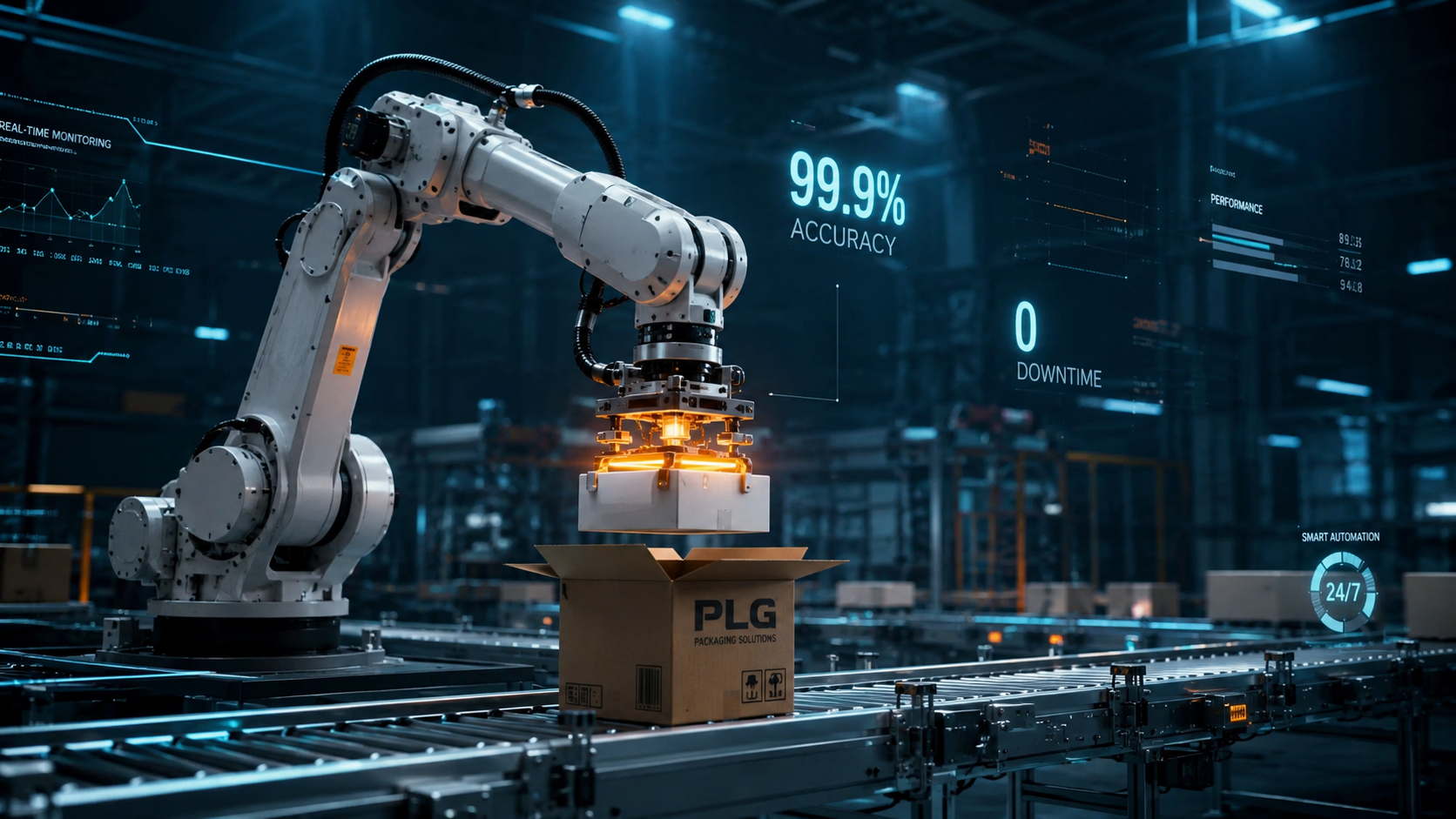
Robotics and automated handling become part of the machine architecture when they are coordinated with process conditions, safety, conveyors, tooling and production logic.
- Pick-and-place and material handling
- Packaging and end-of-line automation
- Robot/PLC handshakes and operating states
- Conveyors, tooling and peripheral equipment
- Vision-assisted positioning and inspection
- Fault recovery and operator diagnostics
Upgrade existing automation without losing useful infrastructure
Industrial modernisation often begins with equipment that still performs useful mechanical work but is limited by obsolete controls, poor diagnostics, unsupported components or isolated data.
GPLG can restructure control, replace obsolete PLC/HMI components, improve communications and introduce supervision or data connectivity in controlled phases around production requirements.
From requirements to stable production
Assess
Process, equipment, constraints and interfaces.
Engineer
Architecture, functions, I/O and operating philosophy.
Develop
PLC, HMI, robotics, communications and software.
Integrate
Machines, safety, vision, SCADA and data systems.
Commission
Testing, validation, tuning and production start-up.
Support
Diagnostics, changes, optimisation and evolution.
Automation connected to the wider GPLG engineering stack
Build automation around the production result you need.
From a single machine to an integrated production line, GPLG combines control, robotics, supervision and industrial software into a maintainable engineering solution.
Discuss your automation project →