




GPLG · SMART WAREHOUSING & INTRALOGISTICS
Smart Warehousing
Automated storage, material flow and warehouse integration engineered around capacity, traceability and reliable logistics.
GPLG combines AS/RS, conveyors, AGVs and AMRs, identification, warehouse software and industrial automation to connect production, storage and dispatch in one coordinated material-flow system.
INTRALOGISTICS ENGINEERING
Make material flow part of the production system
Smart warehousing is not simply a collection of automated racks and mobile robots. Storage locations, product identification, transport routes, buffers, picking operations and production demand must work together as one controlled logistics process.
GPLG develops the automation and integration required to move materials between production, storage, preparation and dispatch while maintaining visibility of where products are and what the system must do next.
The objective is controlled material flow with the right product, in the right location, available when production or dispatch requires it.
SMART WAREHOUSING CAPABILITIES
Automation across storage and internal logistics
Automated storage & retrieval
AS/RS concepts for controlled storage and retrieval using automated cranes, shuttles or other application-specific handling systems.
Conveyor integration
Automated movement between production, storage, picking, packing and dispatch zones with coordinated routing and accumulation.
AGV & AMR integration
Flexible autonomous transport for pallets, containers and materials where fixed conveyor routes are not the best solution.
Inventory visibility
Barcode, identification and software integration for real-time awareness of stock location, movement and availability.
Picking & preparation
Automation concepts supporting order preparation, sequencing, consolidation and movement to downstream operations.
System integration
Interfaces between warehouse automation, PLC controls, WMS, ERP, MES and production systems where required.
AUTOMATED STORAGE
Use warehouse space as an engineered system.
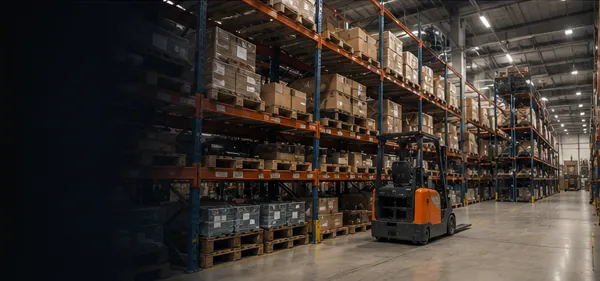
Automated storage can increase usable capacity, reduce unnecessary handling and provide controlled access to materials when it is designed around the real inventory and throughput requirement.
MATERIAL FLOW
From production output to storage and dispatch
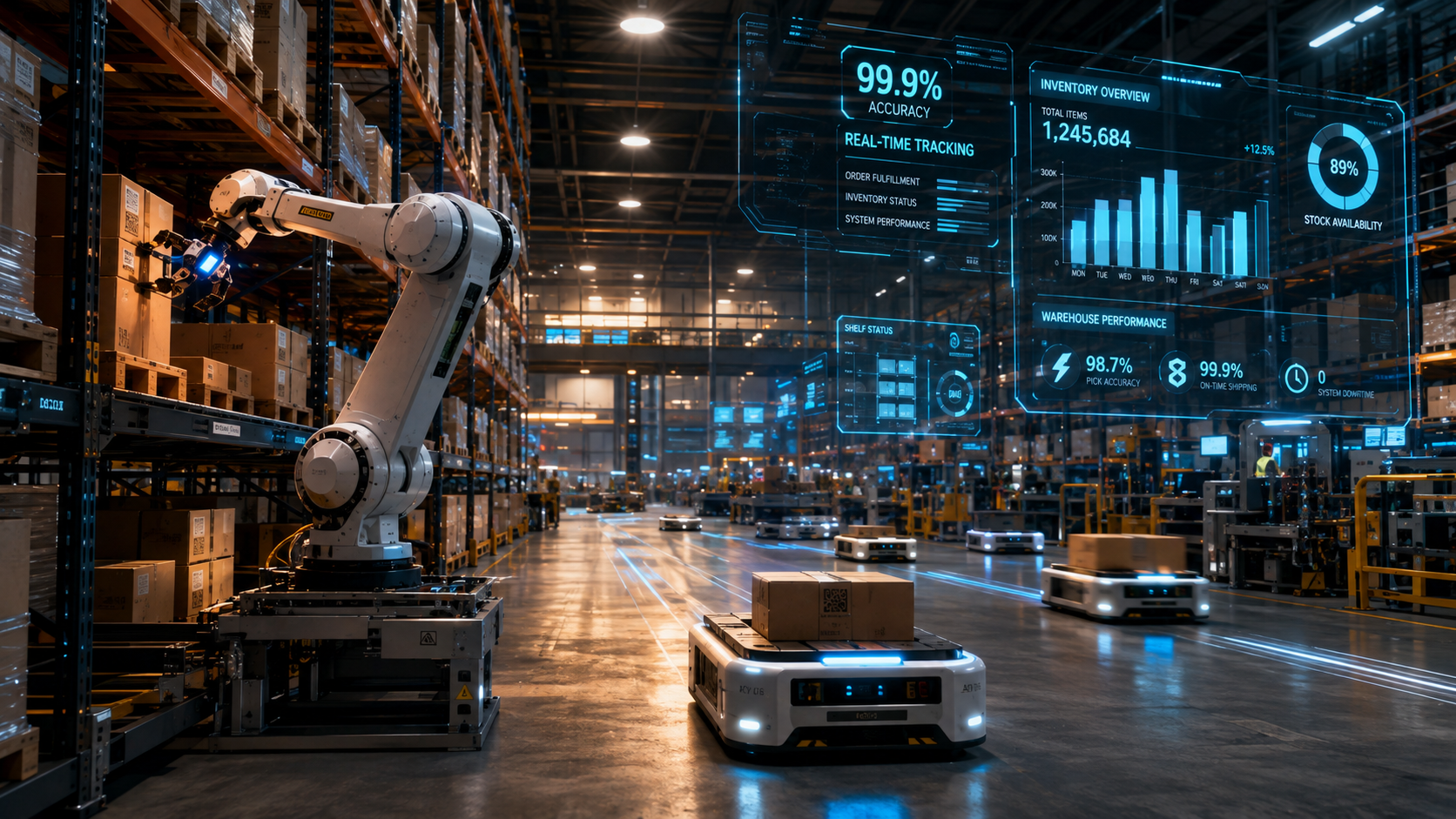
A smart warehouse connects physical movement with identification and control so materials can move through the facility without losing operational visibility.
WAREHOUSE & INTRALOGISTICS FLOW
The architecture is defined around SKU profile, load type, throughput, storage density, building constraints, production interfaces and the required level of automation.
ENGINEERING PRIORITIES
Design around real logistics requirements
Use space effectively
Storage density, aisle strategy, rack geometry and handling technology are evaluated against the actual inventory profile.
Avoid logistics bottlenecks
Transport routes, buffers and equipment cycle times are coordinated with production and dispatch demand.
Know where material is
Identification and transaction logic maintain visibility as stock moves between receiving, storage, preparation and dispatch.
CONNECTED FACTORY LOGISTICS
Connect warehouse movement with production demand.
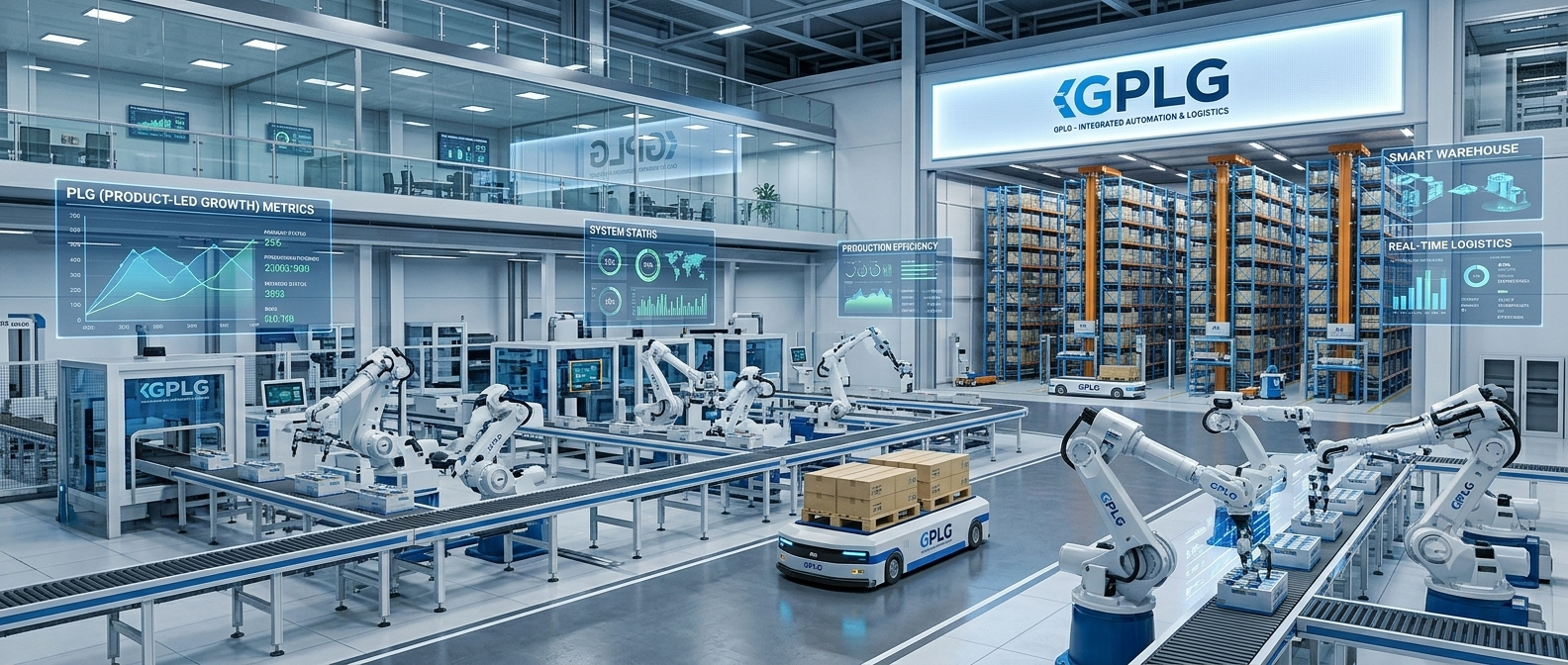
Internal logistics can be coordinated with production status so materials arrive where they are needed while finished goods move efficiently toward storage or dispatch.
AGV & AMR INTEGRATION
Flexible autonomous transport inside the facility
AGVs and AMRs can move pallets, containers, components and finished goods between defined warehouse and production locations without requiring a fixed conveyor for every route.
Integration includes mission requests, pickup and drop-off handshakes, equipment status, traffic considerations, charging strategy and interfaces with machines, conveyors and warehouse systems.
Mobile robotics is most effective when vehicle movement is coordinated with the production and warehouse process rather than treated as a separate transport layer.
WAREHOUSE SOFTWARE & DATA
Connect physical movement with inventory information
Warehouse automation depends on reliable information about material identity, location, quantity and destination. Barcode readers, scanners and other identification systems can connect physical handling to inventory transactions.
Where required, GPLG can integrate automation with WMS, ERP, MES and industrial databases so operational commands and material movements remain aligned with higher-level production and logistics systems.
FROM ASSESSMENT TO COMMISSIONING
Warehouse automation through the complete engineering process
Flow assessment
Review materials, SKUs, load units, volumes, routes, storage demand and operational constraints.
Automation concept
Define storage technology, transport methods, buffers, identification and software interfaces.
Engineering
Develop controls, equipment interfaces, operating sequences, safety functions and data exchange.
Implementation
Integrate automation software, equipment, identification systems and higher-level interfaces.
Commissioning
Validate movements, routes, inventory transactions, recovery procedures and system performance.
Optimisation & support
Improve operation and adapt the system as inventory, production or logistics requirements evolve.
EXISTING WAREHOUSES
Introduce automation without rebuilding the entire facility
Existing warehouses can often be modernised progressively through conveyor additions, mobile robotics, automated storage, identification systems and improved software integration.
GPLG evaluates the existing building, material flow and installed equipment before defining where automation provides a practical operational benefit.
This allows modernisation to be planned around the real facility instead of assuming that a completely new warehouse is required.
CONNECTED ENGINEERING
Smart warehousing within the wider automation environment
Explore engineering disciplines commonly connected to automated warehouse and intralogistics systems.
Industrial Automation
PLC, HMI, control systems and machine integration.
Explore →Robotics Integration
Robotic handling and automated material movement.
Explore →Industrial IoT
Connected equipment, data acquisition and operational visibility.
Explore →Packaging Automation
Connect end-of-line production with storage and dispatch.
Explore →SMART WAREHOUSING
Planning a new warehouse or automating an existing operation?
GPLG can assess material flow, storage requirements, production interfaces and logistics targets before defining the appropriate automation and integration approach.